Spek-tram — variance of sculpture and form
By: Alice Thorson
Sculpture Magazine
November 2017
The best group shows spark conversations between artworks, revealing new dimensions and offering fresh insights. “/spek-tram/ variance of sculpture and form,” which showcased works by many of Kansas City’s best-known sculptors, did just that. Studios Inc is a nonprofit studio complex and residency program located just east of KC’s Crossroads Arts District. It maintains a collection consisting of works donated by resident artists as a condition of their three-year tenure. Studios Inc’s associate director, Robert Gann, drew from these holdings for “/spek-tram.” A Minimalist aesthetic dominated the show, many works evidencing an aura of quiet self-containment and an attraction to domestic and landscape references.
All of the featured artists make the selection of materials a key part of their work. May Tveit’s chosen material is wheat straw, bundled into prickly blocks and encased in solid hues of plastic hard-coat paint. Frosted Flakes (2009), a wall-mounted display of three blocks painted in blue and yellow, exudes an attitude of renegade Minimalism. The color both muffles and emphasizes the work’s relationship to the cereal-producing agrarian landscape around Kansas City.
Ceramic tile, including the small hexagons used for bathroom floors, is Brett Reif’s material of choice. In Froth Worship (2015), a molecular arrangement of spherical forms, he puts tile in the service of a curvy, organic aesthetic that evokes human body parts and excretions. The squiggly Kinky Main Squeeze (2014) suggests a length of intestine. Reif’s strong clean forms found their counterpart in Jill Downen’s four plaster-covered Breast Blocks (2010), displayed on wall-mounted shelves. Resembling the onion domes of Russian and Mughal architecture, these miniature temples mediate between ancient fertility cults and the breast fetish of contemporary mass culture. Architecture is also a touchstone for Matthew Dehaemers’s Water Drops (2012), a birdhouse-like wooden structure stacked with illuminated bottles of colored water in jewel-like hues, and Colby Smith’s Novah #21 (resurrection) (2016), a quiet geometric abstraction created from discarded construction materials and paint.
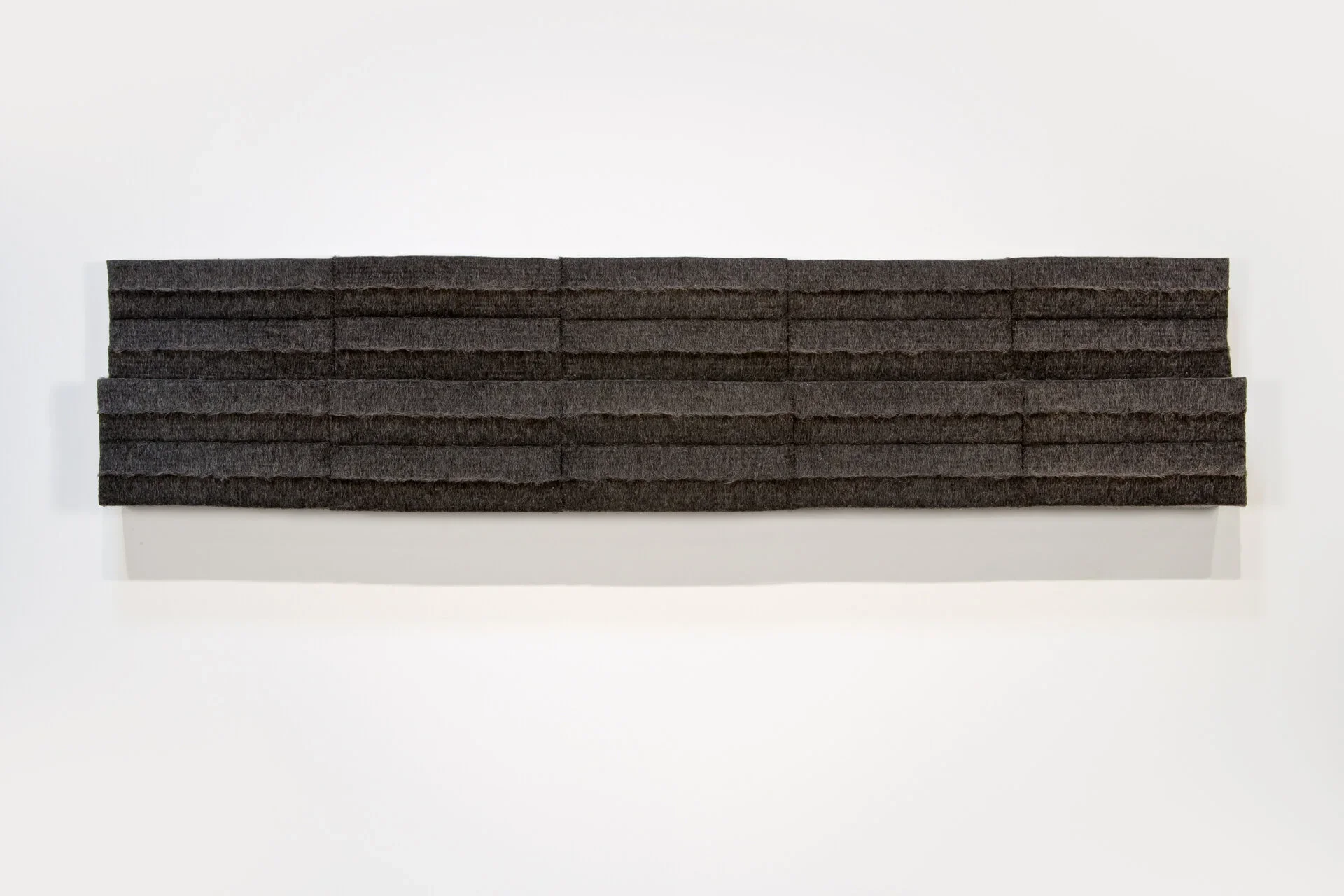
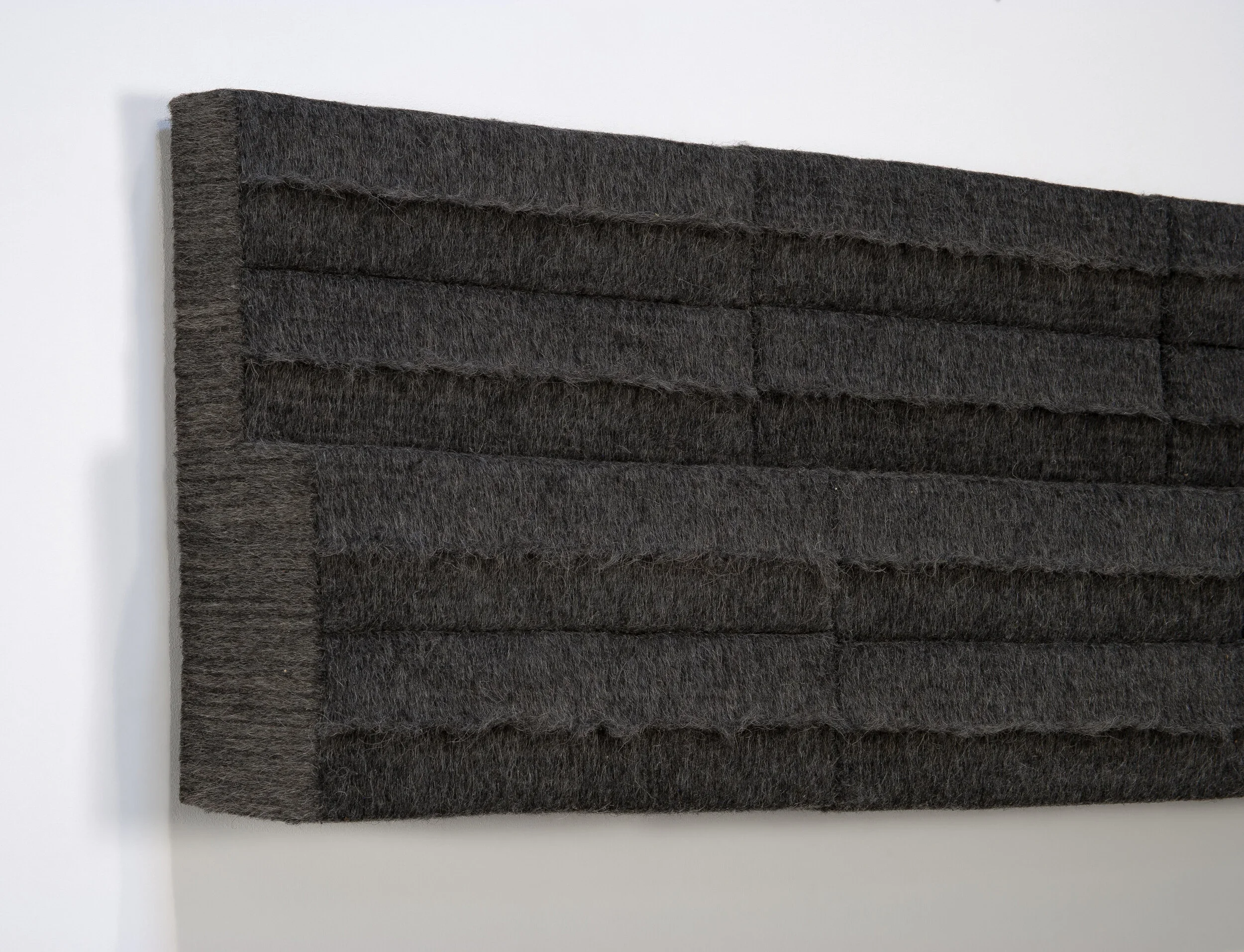
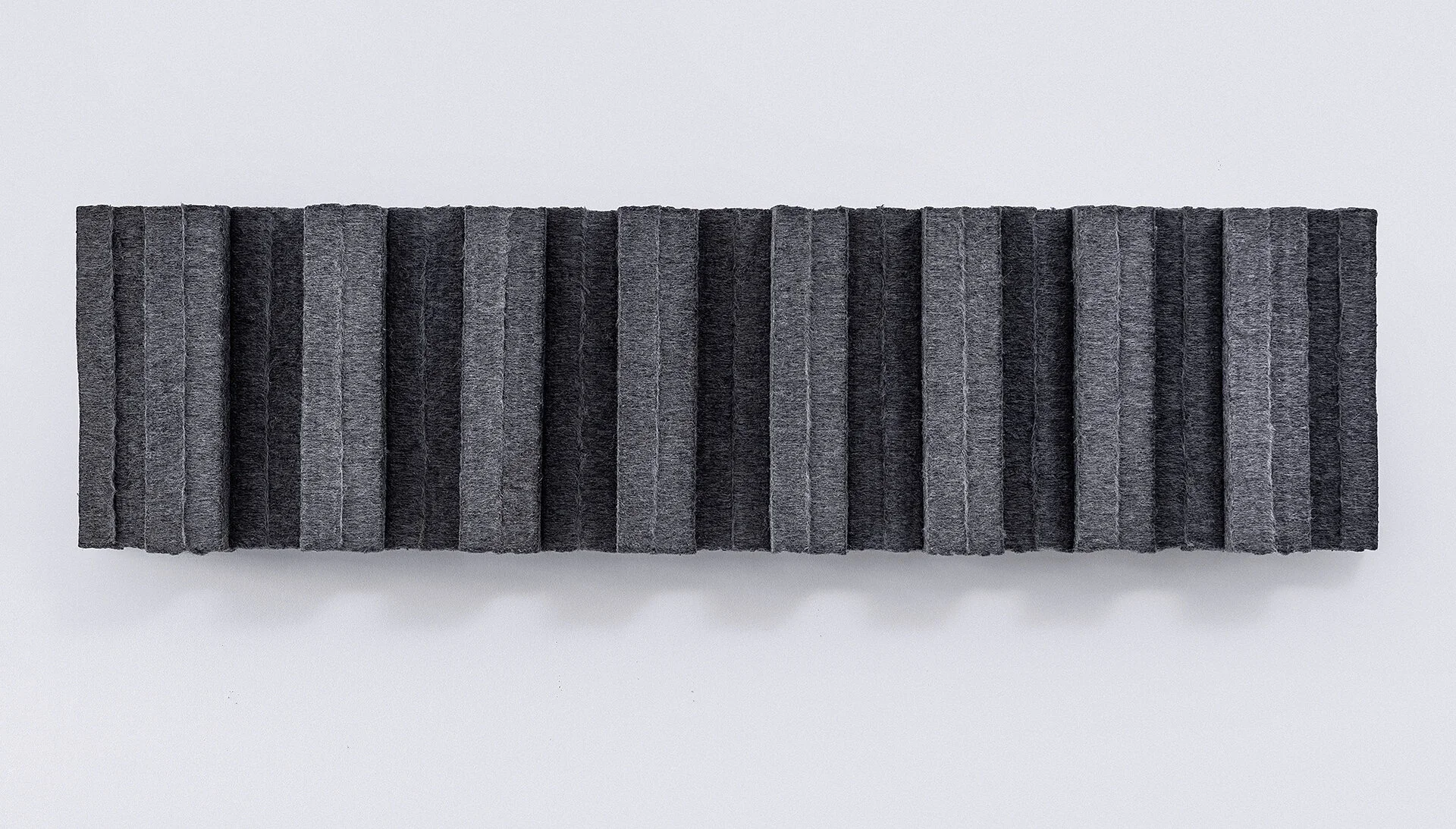
Marcie Miller Gross has worked with felt for years, offering soft versions of hard-edged Minimalist staples. Cut and Sheared (2011), a horizontal stripe painting reimagined in industrial felt, takes us back to the wooly animal source of its tactile gray expanse. Solid #1 Cantilever (2013), which consists of two blocks made from colorful strips of felted sweaters, invokes the bodies of former wearers.
Dylan Mortimer’s Pneuma (2012) takes its title from the Greek word for breath, an allusion to his lifelong battle with cystic fibrosis. Studded with light bulbs, the wall-mounted sculpture of curving, yellow-painted aluminum arrows pointing every which way radiates hope and faith. Tanya Hartman’s Prayer Paddles introduced another moment of ritual into an exhibition otherwise weighted toward the everyday. Fitted with thread-wrapped handles, the paddles are emblazoned with intricate painted designs incorporating typed entreaties, such as “Dear Lord God Please allow me to treat all people with dignity.” Hartman’s plaintive tone contrasted with the head-on pronouncement of Beniah Leuschke’s Pay Dirt (2012). The cut-out letters of the two words dominate a lower expanse dotted with iridescent disks, reflecting Leuschke’s ongoing interest in wordplay and inscrutable relationships between parts.
Incorporating two taxidermy deer, Davin Watne’s Life is a Collision (2008) carried a particular resonance on a February day when the news was filled with reports of a plane hitting a deer. As if to protect against this very kind of incident, Watne mounted car mirrors on the antlers of the male deer, which stands beside his female mate, as if posing for an animal kingdom version of American Gothic. He’s a survivor - one mirror frame holds only the cardboard backing.