10 / Charlotte Street Foundation
By: David Cateforis
Book celebrating the 10th anniversary of the Charlotte Street Foundation
Includes an essay by David Cateforis about Marcie Miller Gross, 2007
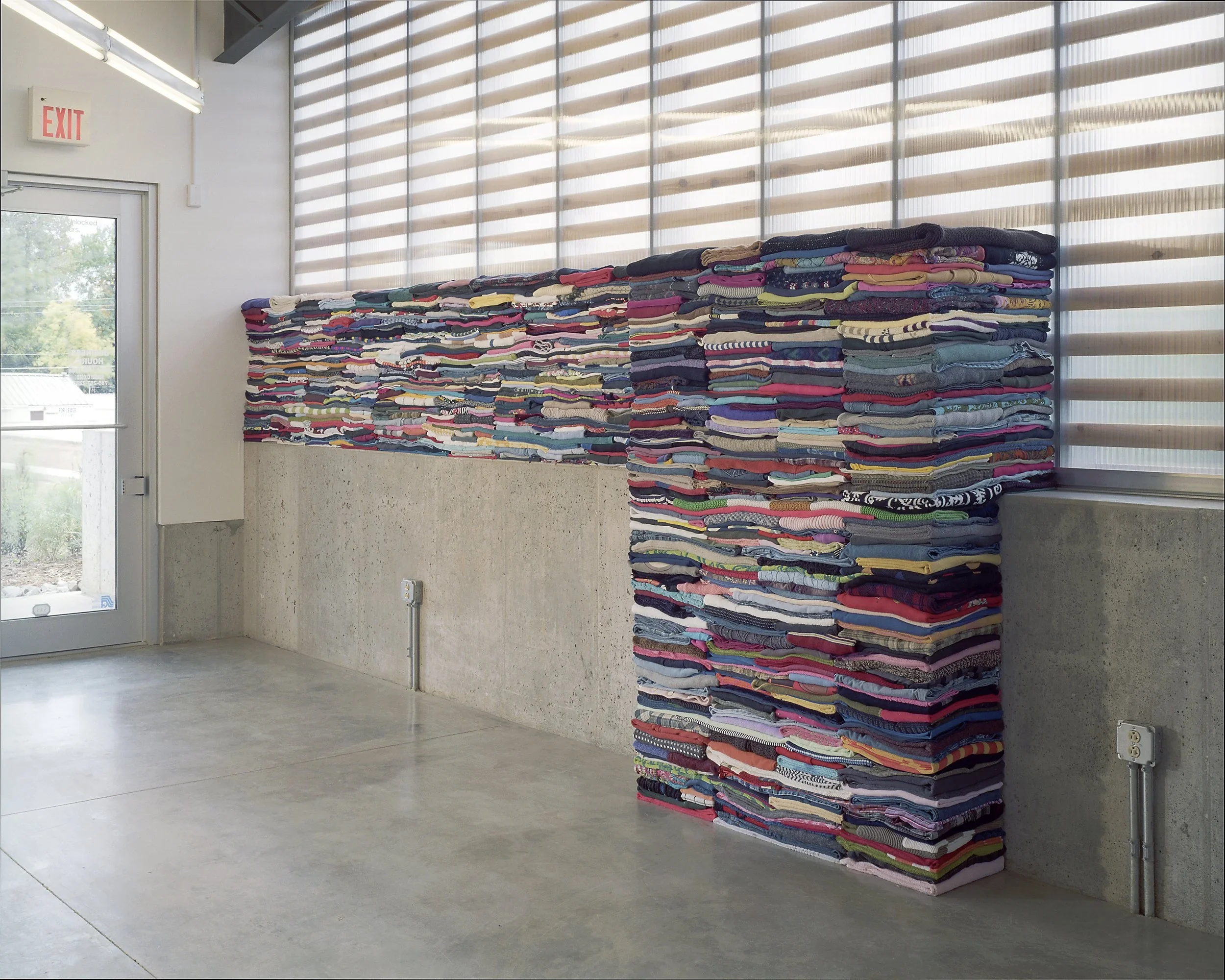
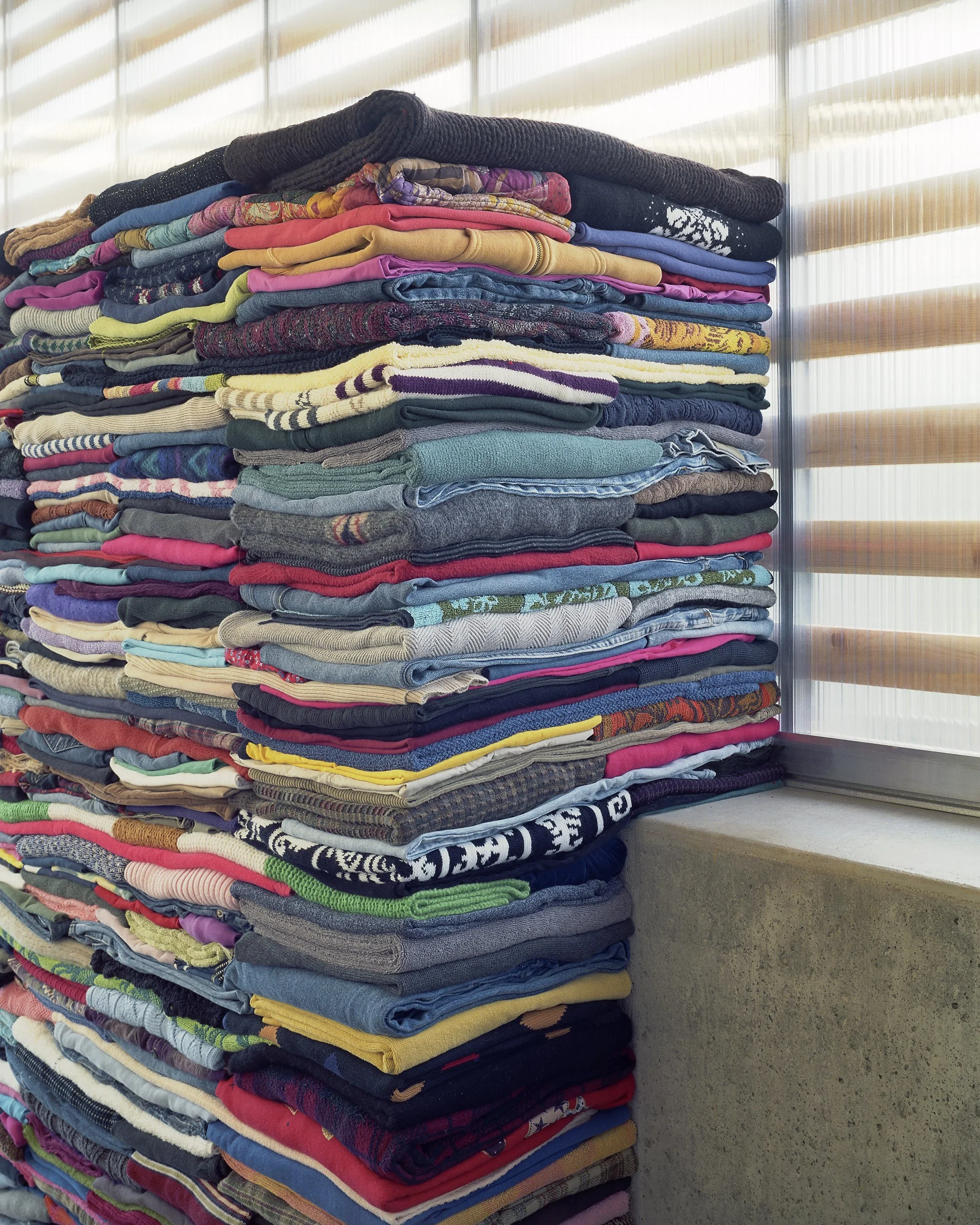
For the past several years Marcie Miller Gross has made art by folding and stacking textile forms, principally towels, to create both self-contained sculptures and site-specific installations. Initially using colorful bath towels then moving on to used white hospital towels, used blue surgical towels, thrift store clothing, and, more recently, new white cotton huck towels, Gross has creatively exploited her fabrics’ embedded associations with the human body, both healthy and sick, while employing them to investigate the material and expressive possibilities of weight, density, compression, repetitive activity, layering, and accumulation.
Gross’s employment of repeated, stacked, manufactured elements references 1960s Minimalism, especially the stacked metal box sculptures of Donald Judd, while her emphasis on process and use of soft, flexible materials evinces a kinship with the Post-Minimal sculpture of Robert Morris, Eva Hesse, and others. Added to these artistic touchstones are poignant allusions to the vulnerable human body generated by abject materials, especially recycled hospital and surgical towels that retain blood and urine stains despite repeated laundering, and Gross’s evocation of mundane and repetitive domestic chores such as washing, folding, and stacking laundry, traditionally identified as “women’s work,” which connects her work to feminist concerns.
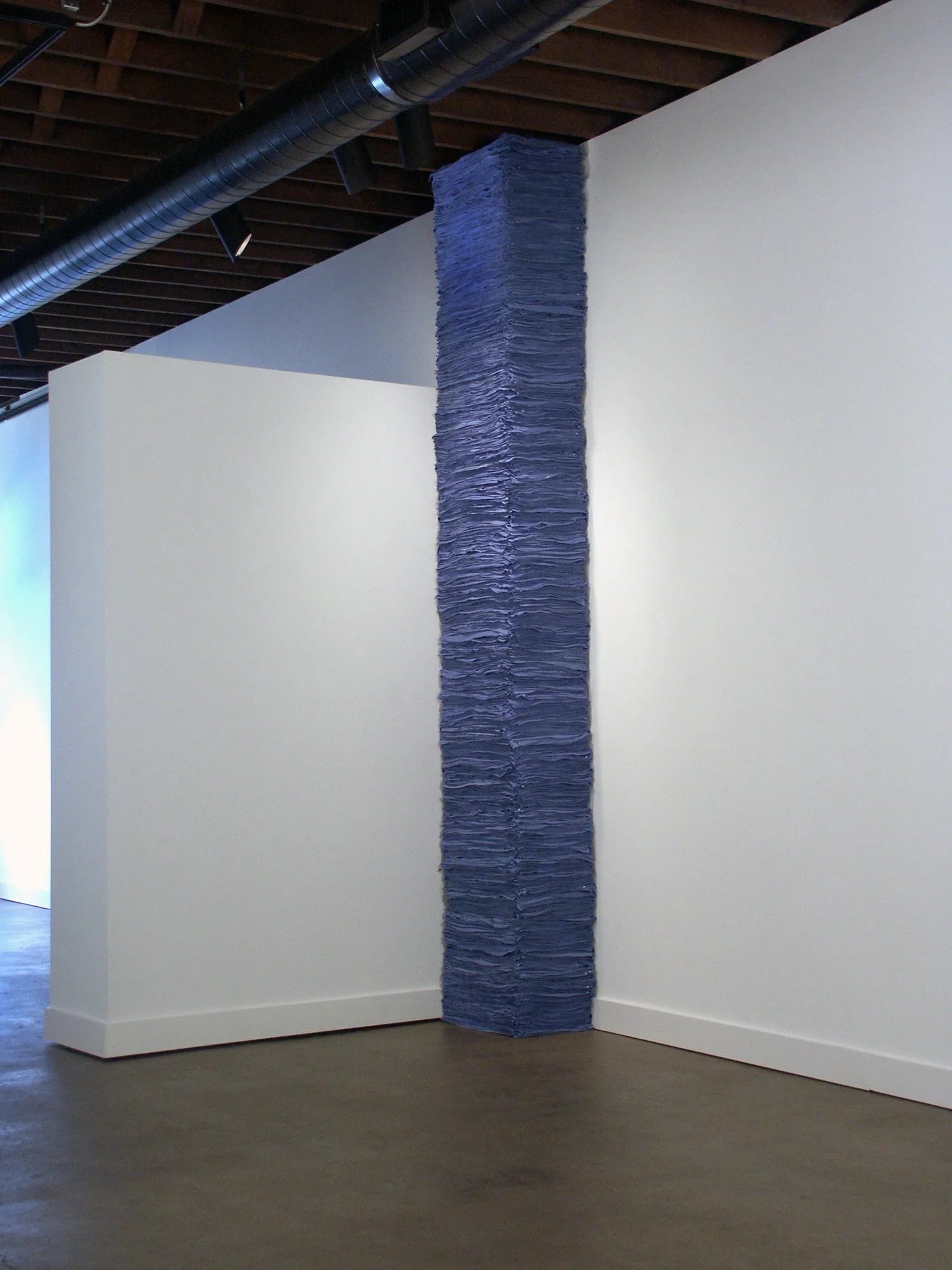
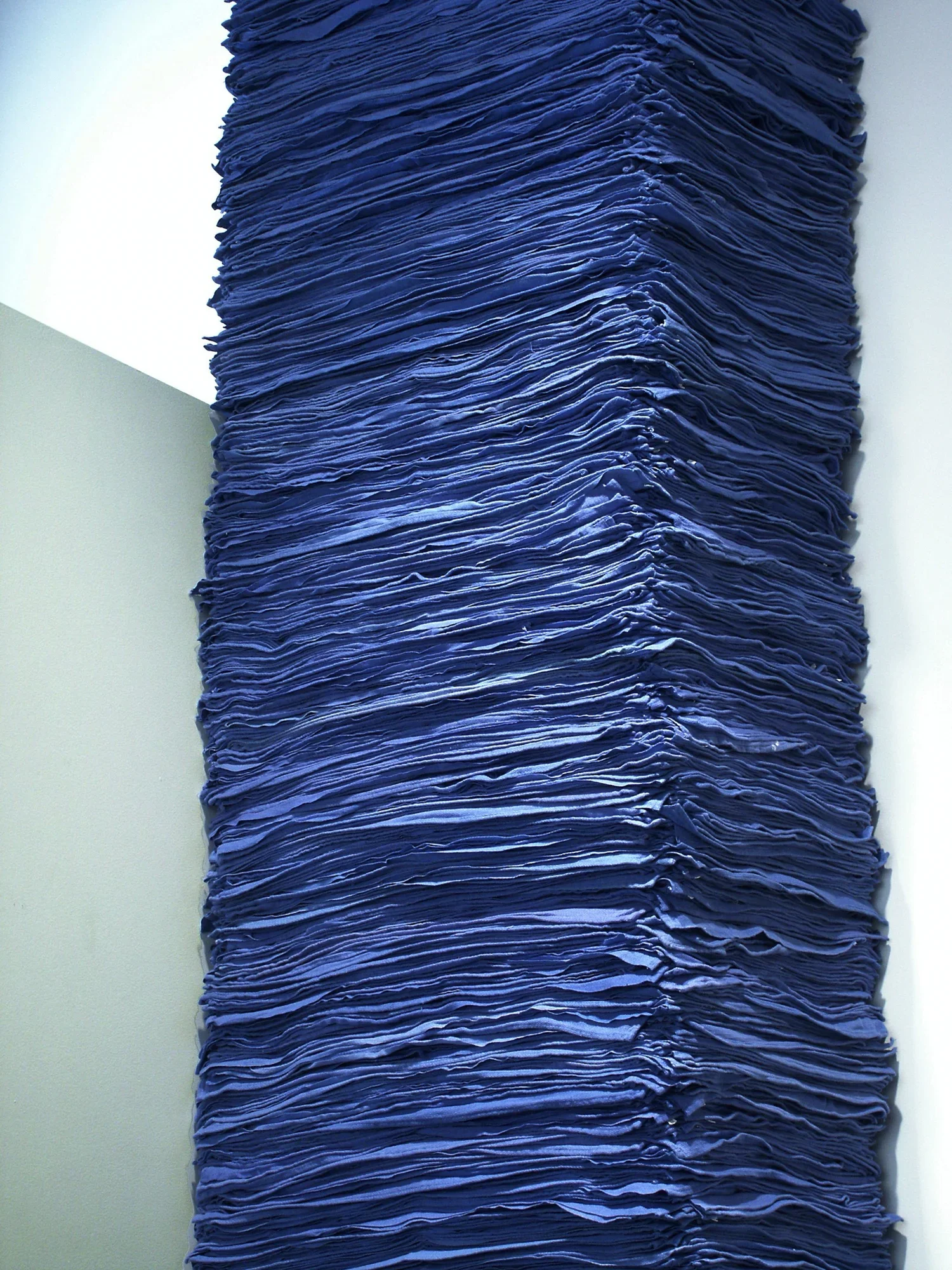
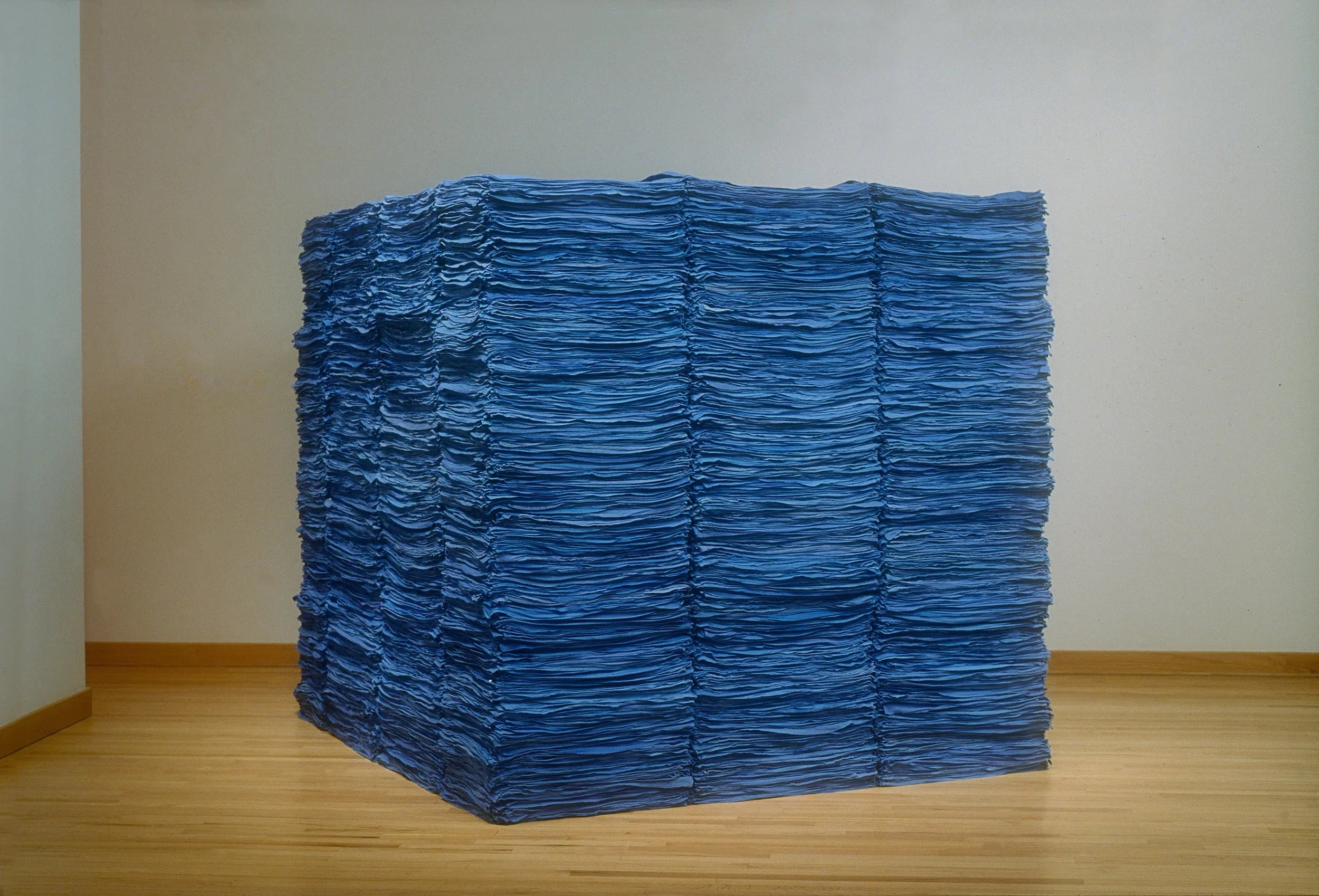
Gross’s self-contained sculptures present stacked textiles on benches or shelves or placed directly on the floor, such as the monumental Mass (2002), a six-foot-tall cube made from layered blue surgical towels. Her site-specific works, such as Axis (2003), a floor-to-ceiling stack of blue surgical towels, enter into a dialogue with, and heighten the viewer’s awareness of, their architectural surroundings. Extending to an engagement with a larger social context, Gross’s Use-Re-Use (2004) at FLEX Storage Systems in Topeka comprised hundreds of pounds of used clothing and bath towels that she purchased from a neighborhood thrift store, washed in a local laundry, stacked precisely in relation to the architectural space, and then donated back to the thrift shop, restoring the towels and clothing to the neighborhood and to human use.
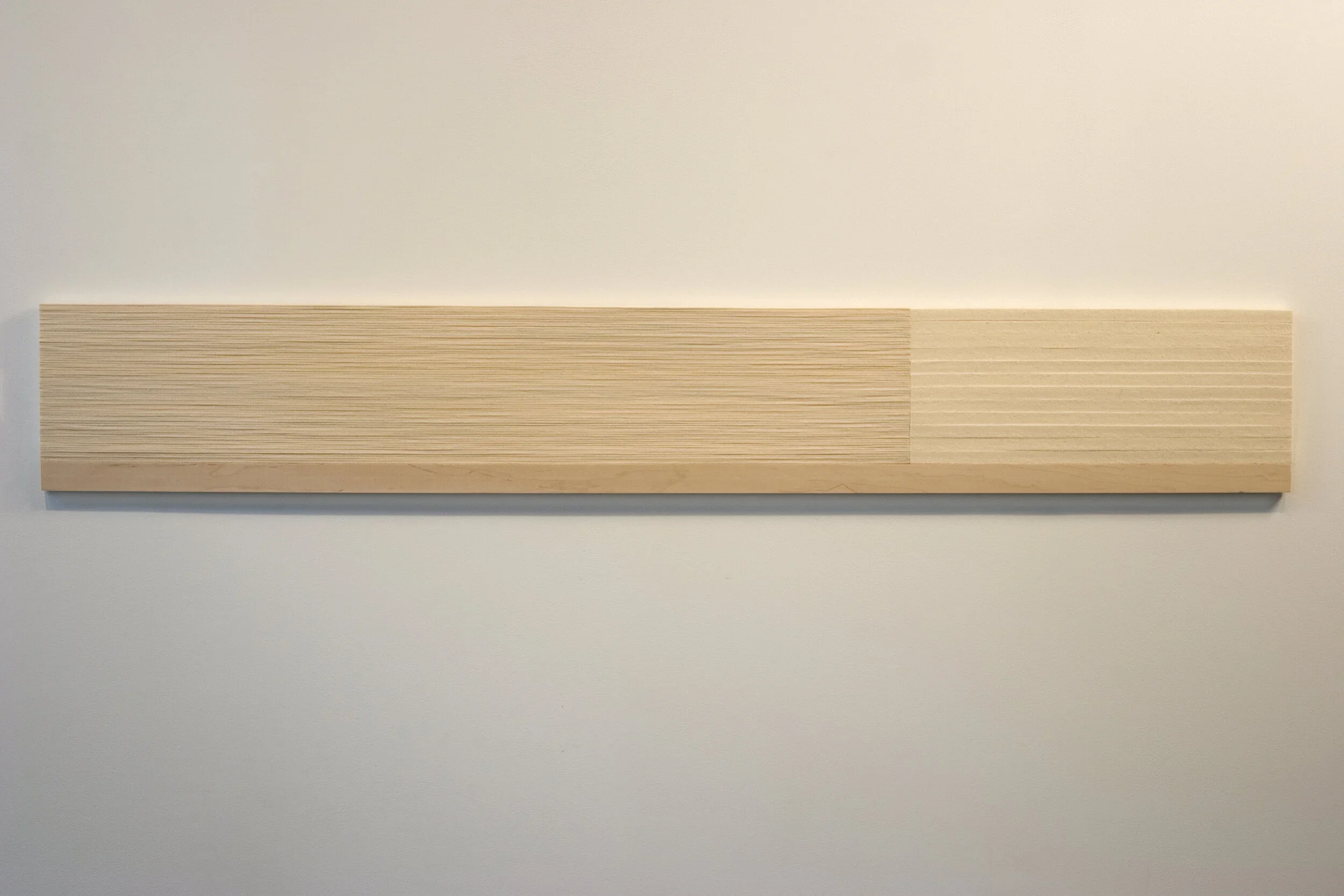
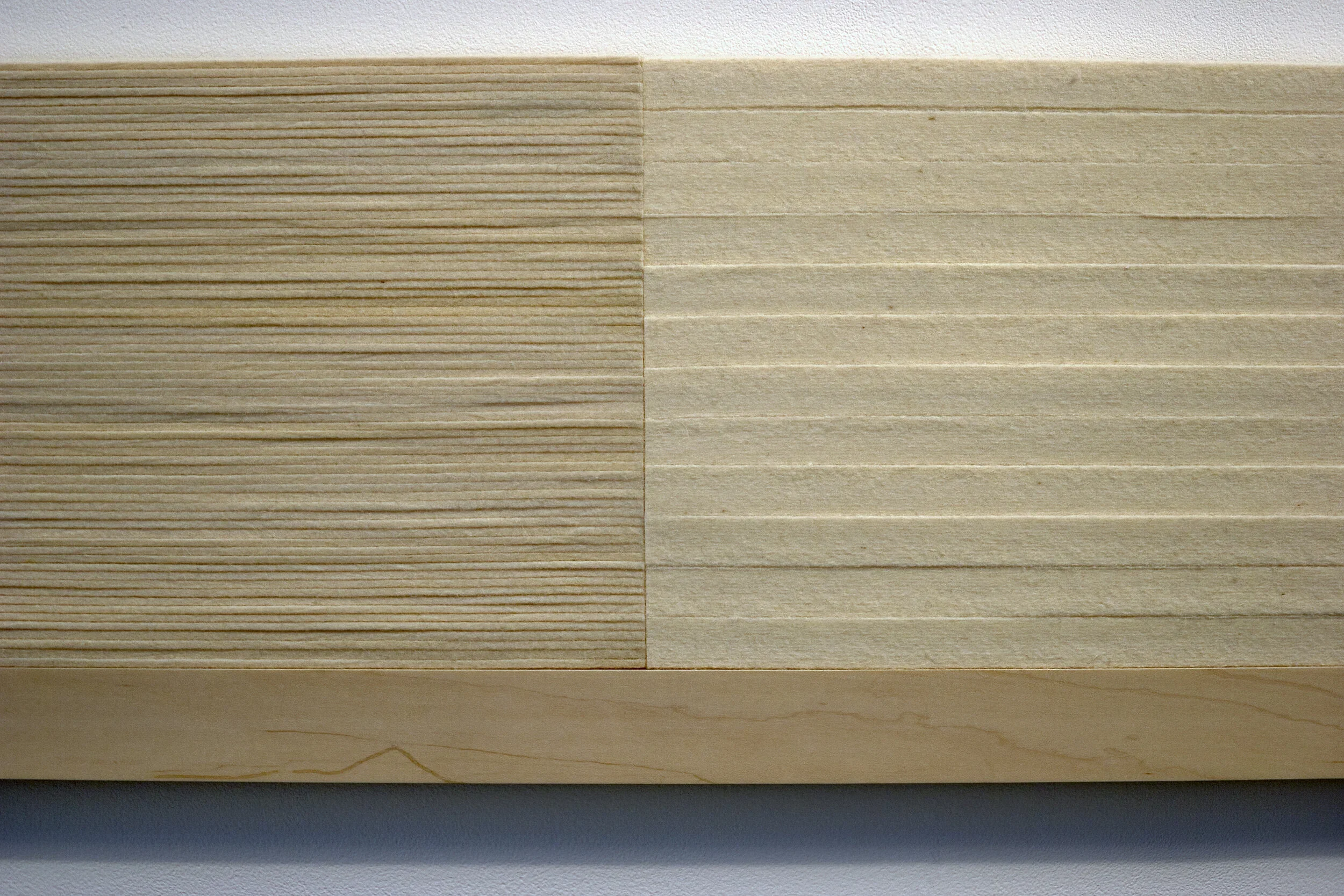
Gross’s 2006 exhibition at the Paragraph gallery featured elegant, wall-mounted sculptures made of strips of industrial felt stacked on wood shelves or wrapped around horizontal lengths of wood to emphasize felt’s associations with insulation and silence. In adopting felt, Gross bravely left behind the towels and clothes that made her reputation and employed a material indelibly associated with both Robert Morris and Joseph Beuys, successfully adapting it to her personal aesthetic and further extending her artistic range.
Image captions:
Mass, installation view, 2002
Used surgical towels, steel
74 x 83 x 84 inches
Courtesy of the artist
Cream (Section) #1 detail, 2006
Industrial felt, maple
10 1/2 x 70 3/4 x 3/4 inches
Collection of Brad and Linda Nicholson