What the Doctor Ordered
By: Charles Linn
Architectural Record
July 2018
While instruction at the Schools of Medicine, Nursing, and Health Professions at the University of Kansas (KU) long enjoyed a reputation of innovation and excellence, the aging facilities did not. Healthcare education has moved in directions that the designers of KU’s six classroom and lab buildings could never have anticipated. With two structures built in the 1930s and a third almost a century old, the university knew that adapting the edifices to meet new standards of health-care education was not an option.
In 2014, the medical school’s leadership seized upon the opportunity to design a new facility from the ground up. They chose Los Angeles-based CO Architects, along with executive architects Helix Architecture + Design, to create a center that would allow the school to incorporate simulations training, or “sims,” into its curricula in a major way while making space for a 25 percent increase in enrollment. More broadly, the architects were to create a building that, located on a prominent corner at the gateway to the campus, would make Kansans proud of the outstanding KU Health System.
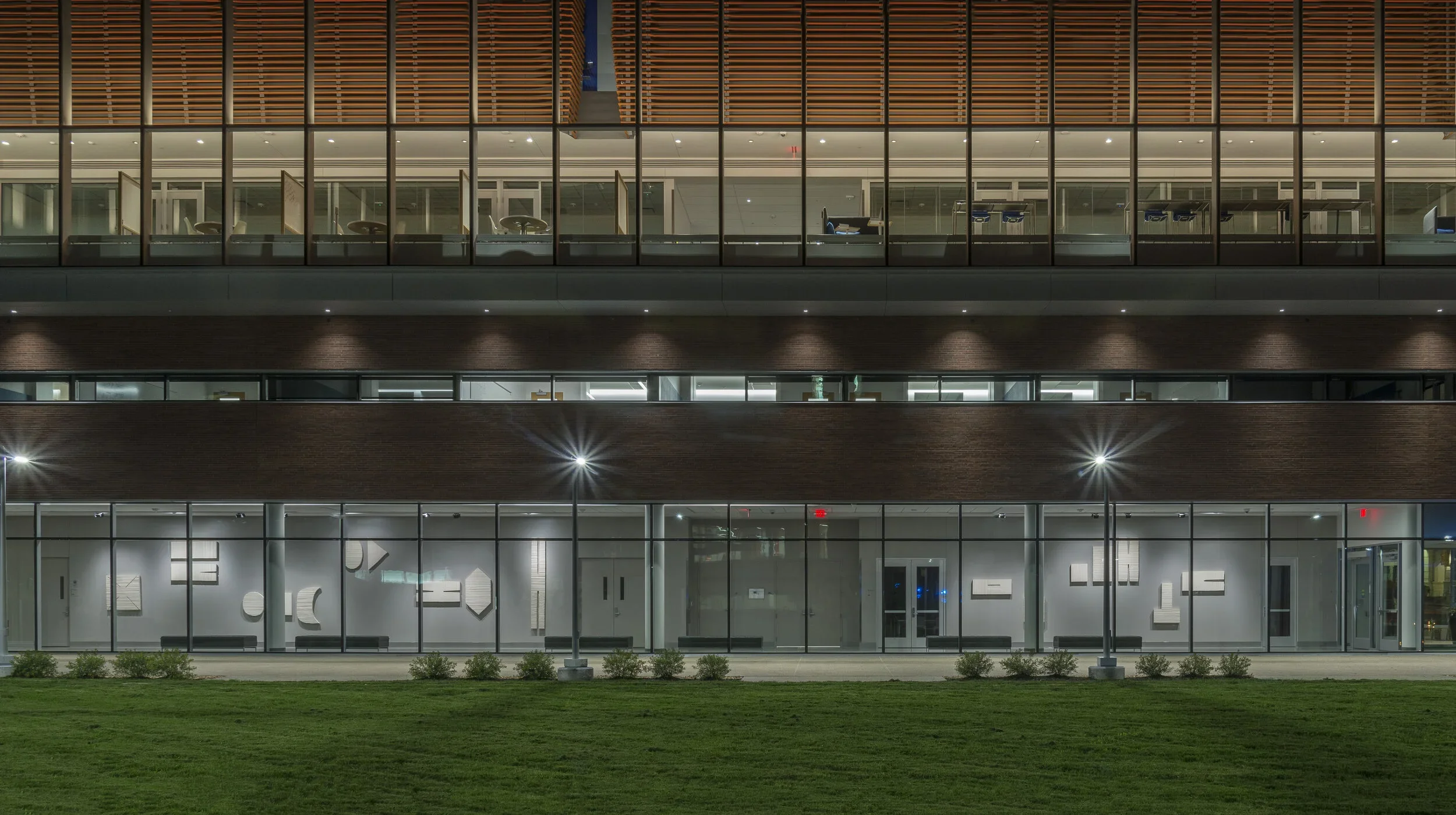
The result is the 172,000-square-foot, six-story Health Education Building (HEB), oriented on an east-west axis overlooking two major streets. At the front, the top four levels are expressed as a cantilevered volume enclosed within a double-walled glass facade. “KU wanted this building to be a front door, and, at night, a lantern,” says Jon Kanda, principal of CO Architects. “Transparency and the use of glass became our modus operandi to achieve those effects.” Behind, to the east, the volume contains small learning studios, the mechanical core, and circulation. Here the facades are clad in roman brick and are slashed by strip windows and a masonry screen. An expansive one-story learning-studio wing with a green roof is sunk into the site to the northeast of the glazed volume, and a new glass-enclosed bridge connects the new building to the north with the existing buildings of the medical campus to the south.
Behind the glass front facade is a gently curving, two-story horizontal screen composed of terra-cotta rods or “baguettes,” intended to evoke biology or anatomy. “People sometimes react to the wall as a transparent skin, seeing the baguettes as ribs, bones, lungs, or some sort of thoracic cavity,” says Helix principal Bryan Gross. “Our intent was not to make it too literal: everyone comes up with their own interpretation of its meaning.” John Gaunt, former dean of KU’s School of Architecture, Design & Planning, who acted as a design consultant for the university, describes the effect of the scheme this way: “The soaring space between the transparent enclosure and the functional ‘box’ within is flooded with light, creating architectural delight without compromising a sense of institutional purpose.”
Functionally, the terra-cotta screen modulates Kansas’s harsh climate and intense sun while providing privacy on the third and fourth floors, where students from all three schools work together on sims, practicing procedures in rooms resembling those they’ll someday use. The burgeoning professionals train with some 130 “standardized patients” - actors trained to exhibit specific symptoms according to what is being taught. For some sims, high-tech mannequins are wired to “speak” from control rooms where instructors observe the students working through one-way mirrors. The wide variety of spaces, including emergency rooms, an ICU, a fully equipped operating room, and a nurses’ station allow cross-disciplinary teams to work through myriad scenarios.
Dr. Robert Simari, executive vice chancellor of the KU Medical Center, notes that the schools’ curricula require medical, nursing, and allied health professionals to do sims together, so that they learn to focus on patient care and safety, engage in collaborative problem-solving, and develop decision-making skills. “We are one of the few programs that merged those silos into a hospital-based environment that’s part of the curriculum in all three schools,” he says.
The architects’ design responded to other new shifts in thinking about medical education as well. Dozens of study rooms for groups of four to 10 replace most single-student carrels, since group learning has been found to be more effective than solo study. Instead of stepped lecture halls, learning “studios” of various sizes allow instructors to stand in the midst of students, with presentations projected on each wall. At 11,000 square feet, the largest of these is located in a part of the building that could almost be considered a separate structure. Built at grade beneath the green roof, the column-free room can be divided in half or combined for events.
The wide, glass-enclosed pedestrian bridge directing foot traffic through the HEB spans 250 feet and has the feel of a village street. One side is used for circulation, and the other is divided into informal living room-like areas, some open and others enclosed. The passageway allows students and staff to have spontaneous meetings or a quiet coffee while escaping from the pressures of their work.
The university’s focus on providing students with the highest-caliber learning facilities ultimately benefits a group of people unlikely ever to set foot in the new HEB: the future patients of the KU-trained doctors, nurses, and other health professionals. “This building is really on the leading edge of medical education,” says Simari, “and, in the end, it all comes down to patient care.”
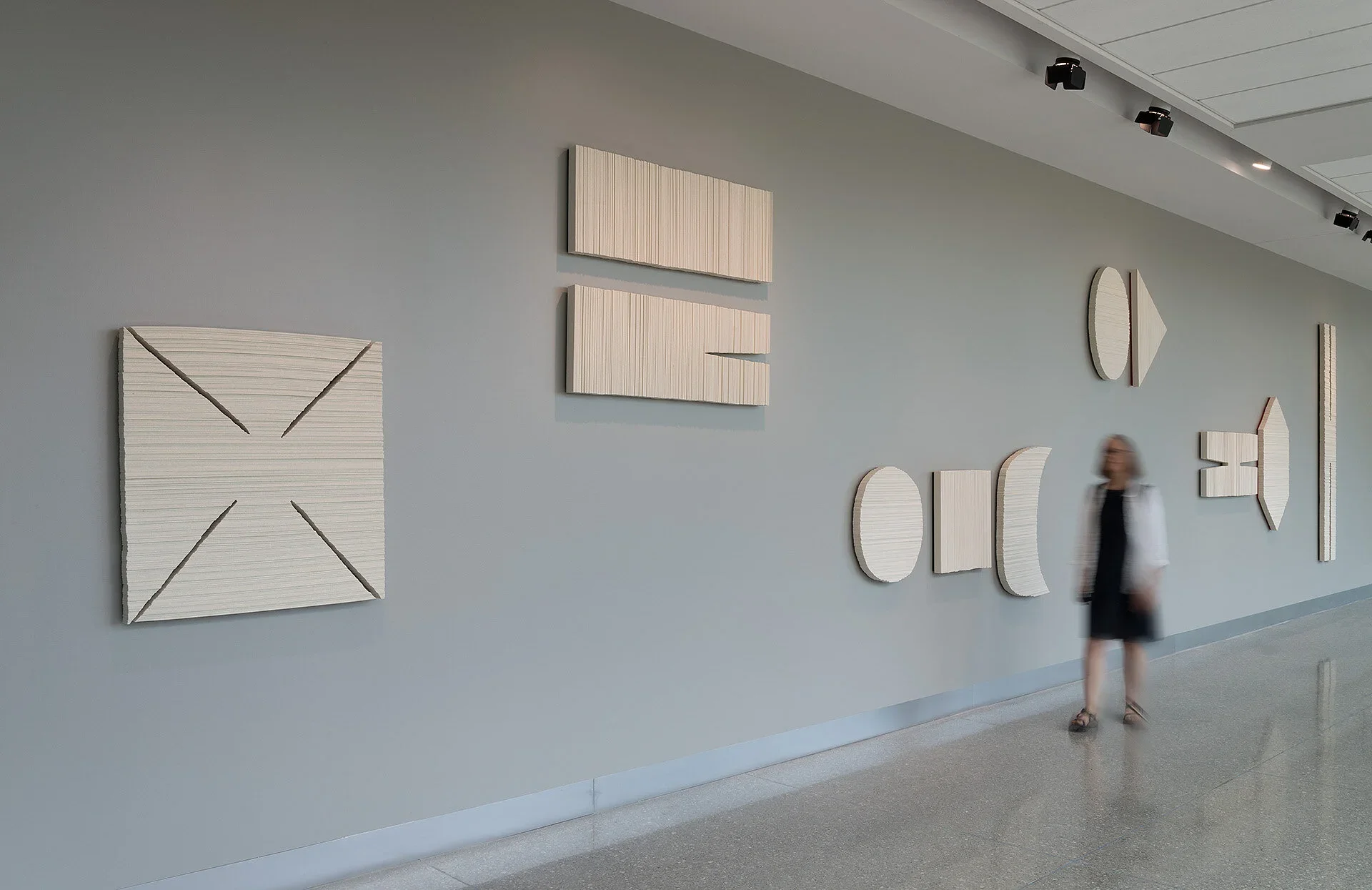
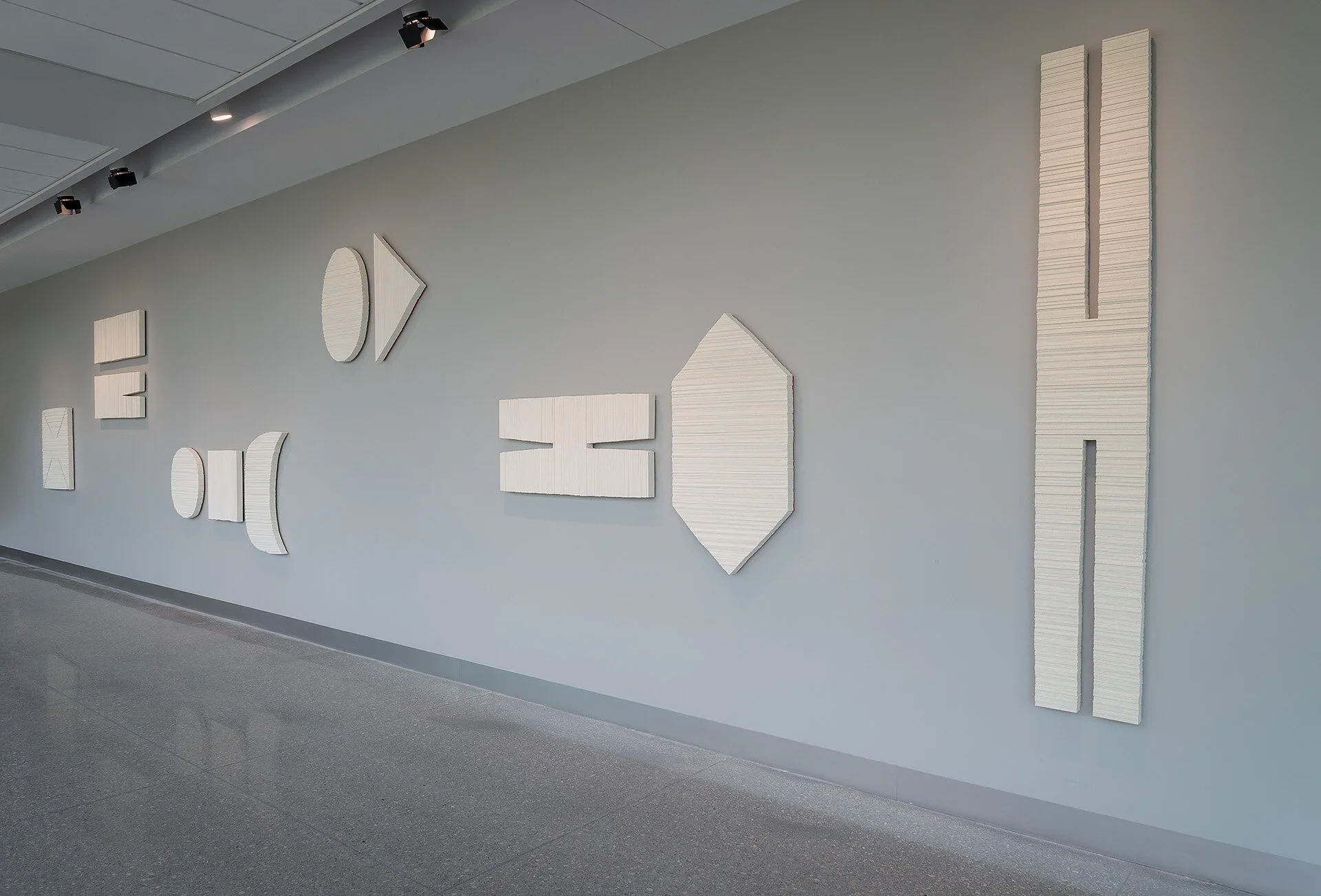
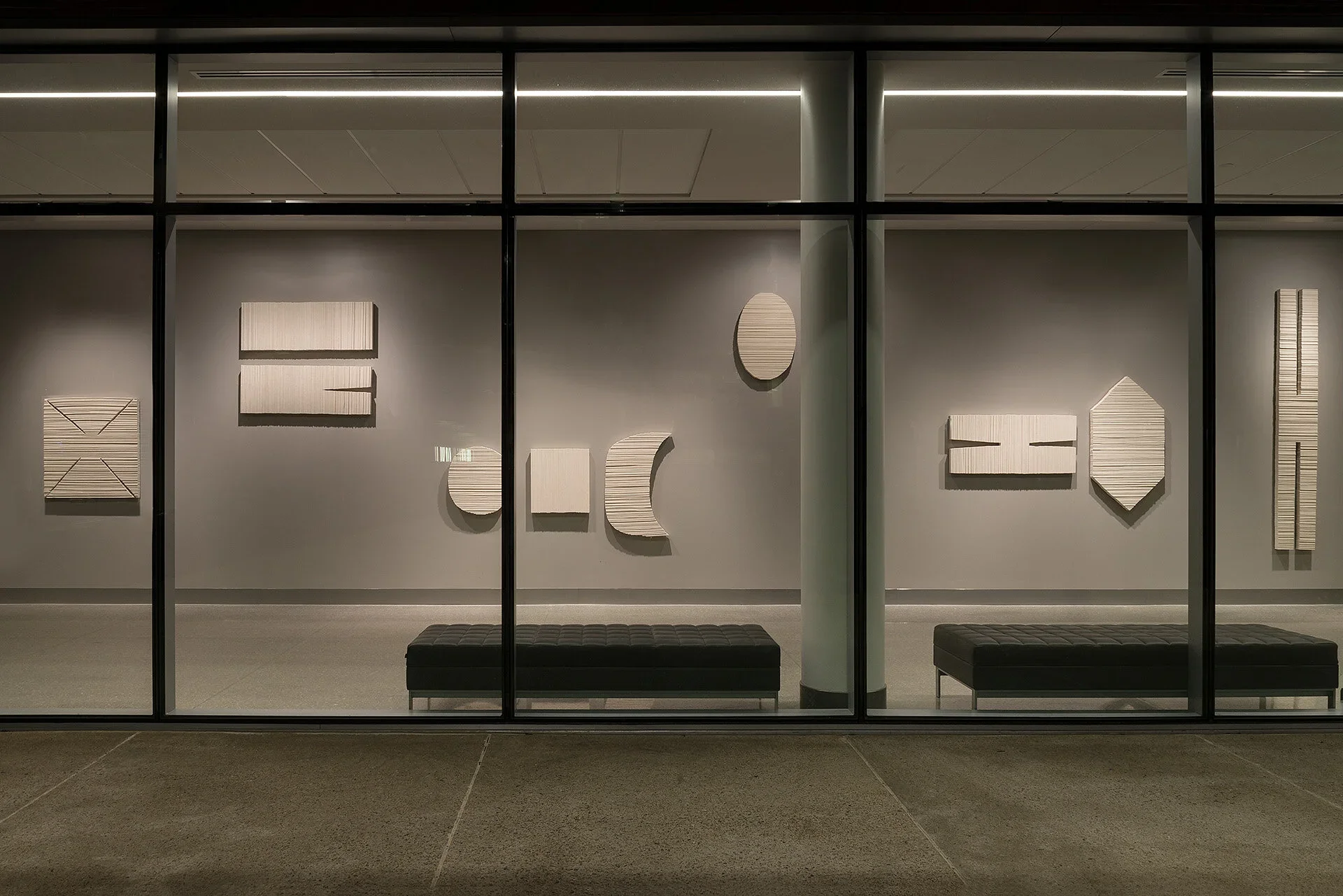
Credits
Design Architect:
CO Architects, 5055 Wilshire Blvd., 9th Floor, Los Angeles, CA 90036; 323.525.0500; F: 323.525.0955
www.coarchitects.com
Personnel in architect’s firm who should receive special credit:
Scott Kelsey, FAIA, managing principal/principal-in-charge; Paul Zajfen, FAIA, RIBA, design principal; Jonathan Kanda, FAIA, LEED AP BD+C, principal for medical education and simulation; Tanner Clapham, AIA, associate/project architect; Chao Chen, AIA, architect; Michael Ly, designer
Architect of Record:
Helix Architecture + Design, 1629 Walnut St, Kansas City, MO 64108; 816.300.0300; www.helixkc.com
Personnel in architect’s firm who should receive special credit:
Bryan Gross, AIA, principal-in-charge; Alissa Wehmueller, interior design principal; Mark Neibling, AIA, architect; Sam Loring, AIA, architect; Kate Phillips, interior designer.
Interior designer:
Helix Architecture + Design
Engineers:
MEP: Henderson Engineers
Structural: Bob D. Campbell and Company
Civil: SK Design Group, Inc.
Consultants:
Landscape: Land3 Studio
Lighting: Henderson Engineers
Acoustical: The Sextant Group, Inc.
Artists: Miki Baird, Marcie Miller Gross, Jesse Small, and Jeremy Rockwell
General contractor:
McCownGordon Construction
Photographer:
Bill Timmerman; 602 403 1441
Specifications
Exterior Cladding
Masonry:
Roman Maximus: Sioux City Brick
Metal panels:
Reynobond ACM: Arconic Architectural Products
Metal/glass curtain wall:
1600 Wall System 2, Structural Silicone Glazed (SSG): Kawneer
Curtain wall:
1600 Wall System 2, SSG: Kawneer
Other cladding unique to this project: behind large glass wall, interior cladding
Terrart Baguette: NBK Architectural Terracotta
Roofing
Built-up roofing:
Thermoplastic polyolefin (TPO): Carlisle Syntec Systems
Metal:
Double-Lock Zee-Lock Standing Seam Roof: Berridge Manufacturing Company
Other: Green roof
Green Roof System: Carlisle Coatings & Waterproofing
Glazing
Glass:
Solarban 72 Starphire ultraclear: PPG
Skylights:
Solarban 72 Starphire ultraclear: PPG
Doors
Entrances:
Kawneer
Metal doors:
Ceco Door
Wood doors:
VT Industries
Fire-control doors, security grilles:
Fire Control Doors: Won-Door
Overhead Coiling Doors: Overhead Door Co.
Special doors:
Vertical Operable Door: Skyfold
Hardware
Locksets:
Corbin Russwin
Closers:
Corbin Russwin
Exit devices:
Von Duprin
Pulls:
Rockwood Architectural Pulls
Interior Finishes
Acoustical ceilings:
Ultima, Optima, MetalWorks: Armstrong
Suspension grid:
Prelude: Armstrong
Demountable partitions:
Privacy System: Steelcase
Cabinetwork and custom woodwork:
C&S Woodshop
Paints and stains:
Sherwin-Williams
Plastic laminate:
Formica
Solid surfacing:
Caesarstone; DuPont Corian; Wilsonart
Special surfacing:
Back-Painted Glass: Walker Textures
Polished Plaster: Armourcoat
Acoustic Panels: Novawall
Panel Fabric: Xorel: Carnegie Fabrics
Floor and wall tile:
Floor Tile: Floor Gres; Mosa
Wall Tile: Daltile; Atlas Concorde
Resilient flooring:
Rubber Sheet: Nora
Resilient Base: Johnsonite
Carpet:
Interface
Raised flooring:
Intertek
Special interior finishes unique to this project:
Terrart Baguette: NBK Architectural Terracotta at double facade
Wall Protection: Acrovyn: Construction Specialties
Roller Shades: MechoSystems
Furnishings
Office furniture:
Steelcase
Reception furniture:
Lounge Seating: Coalesse
Lounge Seating: Bernhardt Furniture Company
Lounge Seating: Andreu World
Lounge Seating and Small Tables: Hightower
Lounge Seating: Loewenstein
Café and Lounge Seating: Herman Miller
Reception Desk: Tuohy
Chairs:
Classroom Chairs: Herman Miller
Guest Chairs: SitOnIt
Tables:
Classroom Tables: Versteel
Meeting: Steelcase
Study Tables: Herman Miller
Upholstery:
Maharam
Designtex
Camira Fabrics
Bernhardt Textiles
Other furniture:
Marker Boards: Clarus, Steelcase
Interior Planters: Magnuson Group
Waste/Recycling Receptacles: Steelcase
Power Hubs: Steelcase
Lighting
Interior ambient lighting:
2x2 and 2x4: Axis Lighting
2x4: Lithonia Lighting
Cove/Indirect: Ecosense Lighting
Indirect: A Light
Linears:
Axis Lighting
Linears: Mark Architectural Lighting
Linears: Prudential Lighting
Simulation Rooms: Healthcare Lighting
Simulation Rooms: Columbia Lighting
Track: Juno Lighting
Wall washing/grazing: Ecosense Lighting
Wall washing/grazing: Prudential Lighting
Wall grazing: Xenon Architectural Lighting
Downlights:
ALW
Kurt Versen
Lithonia Gotham
Tasklighting:
Exam Light: Skytron
Surgical Light: Stryker
Undercabinet: Healthcare Lighting
Exterior:
Accent lights: Qtran
Site/Area Pole Lights: Cree
Downlights: Lithonia Gotham
Handrail Lighting: Livers Bronze
Dimming system or other lighting controls:
Acuity Controls
Conveyance
Elevators:
Otis Elevator Company
Author note:
Charles Linn is a Kansas City-based writer and architect and a former deputy editor of Architectural Record.